
Acceptable Plagiarism
Why every story needs its own barbarian horde


You are probably outraged at the title of this piece.
“Plagiarism is never acceptable!” you may cry.
Ordinarily I’d agree with you. But if you have a small child in your life who considers you a 24-hour story dispenser, you may eventually resort to it. And I promise this tale of theft ends with a useful reminder about fiction.
My granddaughter — Internet name: Lillian — is now 12. But for years she demanded endless stories from me.
At first, I made things up from whole cloth. There was a princess suspiciously similar to Lillian, with a family suspiciously similar to hers. The princess was, naturally, named Lillian.
There were stories about her cats sneaking into the living room at night to watch Catflix. There was an entire geopolitical saga involving Catland and Dogland, presided over by Queen Fluff, who was forever fending off canine invasions aimed at stealing the cats’ asparagus harvest.
Yes, that was an attempt to get Lillian to eat asparagus.
Yes, it worked.
I also told stories from her mother’s childhood, which she loved — except for the part where she refused to believe that her other grandfather (my ex-husband) and I had once been married and were the actual parents of her mother. This struck her as implausible fiction.
Children are harsh critics, man.
The problem was that she always wanted more.
“Tell me another story!”
Often this happened late at night when I was exhausted and she was electrified with wakefulness. So eventually, I resorted to plagiarism.
I lifted plots from the hero’s-journey paperbacks my son devoured as a child.
I told her about a young man from a small village who went on a journey with a mysterious older man who could fight and wield magic. They battled barbarian hordes. The old man trained the boy. The odds seemed impossible. Bravery ensued. In the end, the boy triumphed.
The end.
There was a pause.
Then a small voice: “Tell me more.”
“Uh,” I said. “They returned to the village. There was a celebration. The boy married the smartest girl in town. They lived happily ever after. The end.”
“Tell me more!”
“They had children. They were very happy. Everything was peaceful. They went to bed early every night and slept soundly.”
Silence.
Then she shouted:
“Bring back the barbarian hordes!”
‘Happily Ever After’ Is a Sedative
She was illustrating something important.
“Happily ever after” is not an ending. It is a sedative. And a sedative was the very last thing this harsh little critic wanted.
Even a child knows that once the danger disappears, the story disappears with it.
Comfort is lovely in life, but in fiction it’s best in small doses.
Sometimes Comfort Itself Is Horrific
I’m a huge fan of The Road, and if you have read the book or seen the movie, I know you remember the all-too-brief interlude in which the man and his son find someone’s bunker. For once, they are warm, safe and well-fed.
This is such a contrast to the rest of the story that I can barely tolerate that scene. It’s a picture of what might have been and of what can never be. It makes the rest of the story all the more horrifying.
Conflict Is Narrative Oxygen
I have never written a fantasy novel, but almost every story benefits from some version of a barbarian horde.
Conflict does not have to be apocalyptic. It can be subtle. It can be emotional. It can be internal. But something must press against your characters.
Divorce. Illness. Betrayal. Financial collapse. A moral dilemma. A secret revealed.
These are all barbarian hordes.
Even ‘Quiet’ Novels Have Hordes
Take The Enchanted April, about four women who rent an Italian castle for a restorative month. No one is murdered. No kingdoms fall. No literal hordes storm the gates.
And yet, each woman arrives carrying some kind of dissatisfaction. The conflict is internal and relational, not violent. But it is still conflict. Without it, the villa would simply be a brochure.
Even the gentlest stories require friction.
If Your Story Feels Flat…
When characters become too comfortable, readers drift. Even if you’re not writing an action story, you need some kind of action.
If your middle sags, if your scenes feel pleasant but inert, if everyone is getting along beautifully and nothing is at stake — you already know what to do:
Bring back the barbarian hordes!

About Michelle Teheux
I’m a writer in central Illinois who has published 21 books, most of them self-published. Subscribe to The Indie Author! My other Substack, Untrickled, is about economic inequality. You can also subscribe to me on Medium. My most recent novel is The Trailer Park Rules. My most recent nonfiction book is Strapped: Fighting for the soul of the American working class. Tips accepted at Ko-fi.
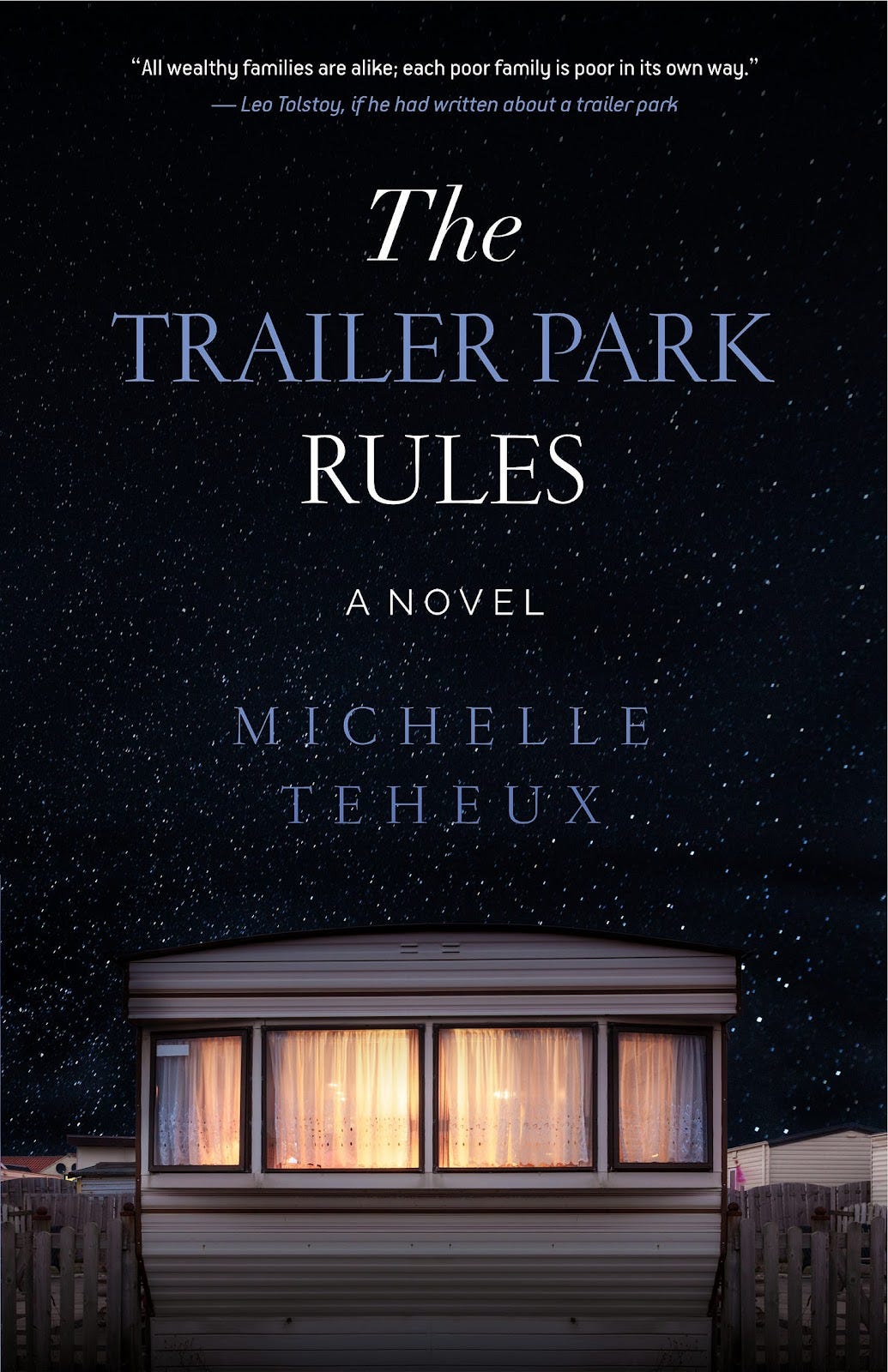
All wealthy families are alike; each poor family is poor in its own way.
— Leo Tolstoy, if he had written about a trailer park
For residents of the Loire Mobile Home Park, surviving means understanding which rules to follow and which to break. Each has landed in the trailer park for wildly different reasons.
Jonesy is a failed journalist with one dream left. Angel is the kind of irresponsible single mother society just shakes its head about, and her daughter Maya is the kid everybody overlooks. Jimmy and Janiece Jackson wanted to be the first in their families to achieve the American dream, but all the positive attitude in the world can’t solve their predicament. Darren is a disabled man trying to enjoy his life despite a dark past. Kaitlin is a former stripper with a sugar daddy, while Shirley is an older lady who has come down in the world and lives in denial. Nancy runs the park like a tyrant but finds out when a larger corporation takes over that she’s not different from the residents.
When the new owners jack up the lot rent, the lives of everyone in the park shift dramatically and in some cases tragically.
Welcome to the Loire Mobile Home Park! Please observe all rules.
I loved “Enchanted April”. Each woman had their own individual, powerful story.